An employee uses ChatGPT to draft a proposal and sends it to a colleague. The colleague feeds it into their ChatGPT for an evaluation and sends back the feedback. The first employee asks ChatGPT to incorporate it and returns the revision.
A few rounds later, everyone agrees the work is finished. Success. Two people produced a proposal in a fraction of the usual time.
Notice that nobody asked the other person a question. They only exchanged answers.
Did they actually collaborate? Did they challenge each other’s thinking or understand the problem any better? Or did they trade AI-generated work until both systems agreed it was good enough?
I see this pattern a lot.
For decades, organizations have rewarded productivity. More output, less waste, less time. AI is very good at exactly that. Work that took hours now takes minutes.
The obvious move is to do the same work with fewer people. The savings are immediate and measurable, and companies do have to survive.
The alternative is to point the reclaimed time at the business itself. Imagine a team that uses its saved hours to interview ten customers a month and discovers a need no one had on the roadmap. Or a manager who replaces weekly status reports with a weekly session to brainstorm new solutions to problems we didn’t have time to explore in the past.
That all sounds great, but it’s harder than assigning tasks and measuring their completion.
It’s unstructured. It demands curiosity, judgment, and a willingness to take risks. It runs on conversations rather than statuses and finished assignments. It doesn’t produce neat deliverables or impressive slides.
We’ve become far more comfortable measuring completed work than evaluating the benefits of creative thinking.
And employees have adapted. Many have spent years accepting assignments, completing them, and moving on to the next task. They learned to wait for direction rather than offering opinions or challenging assumptions.
We’ve conditioned people to deliver answers. Now we need them to start asking questions.
That’s a challenge for managers and employees alike. Leaders have to create room for independent thinking, and employees have to rekindle their curiosity and the confidence to use it.
AI can serve either goal. It can write the proposal faster, or it can help us test assumptions and explore ideas. The first makes the business we have more efficient. The second builds a better one.
Ask your team what question they’d explore with five extra hours. Their initial reaction will tell you something about your culture. But their answers might tell you something important about your future.
Doing what we’ve always done more efficiently is now the price of admission. Discovering what we should be doing next is the real prize.
And getting there before our competitors do is how we win it.
Most of us know FUBAR as the old military acronym for something that has gone terribly wrong (f’d up beyond all recognition). There’s another FUB that can help companies avoid getting there.
Fear. Understand. Build.
Fear
Fear gets a bad rap in business. Leaders are supposed to be confident, decisive, and optimistic about the future. But fear can be useful. A new competitor appears. Technology changes what customers expect. An industry that seemed stable suddenly isn’t. AI makes something possible that would have sounded ridiculous three years ago. If that makes you a little afraid, good, that means you’re paying attention.
The problem isn’t fear. It’s what we do next.
Companies rarely respond to disruption by doing nothing. They form committees, hire consultants, buy software, launch pilots, and look for ways to respond. Activity feels like progress.
AI is a great example of this. Ask companies what they’re doing with it, and many will describe activities. You’ll hear that developers are writing code faster, reports are getting better, repetitive work is disappearing, and some SaaS applications are now built internally. Then someone shows the board a slide that says 47 AI use cases are underway, and everybody feels a little better.
The company is doing something.
Activity helps us learn, but it becomes dangerous when we mistake it for understanding. A company can get very good at using AI to improve its existing operating model without asking whether that model is the one it will need.
Understand
It’s reasonable to ask: What can we do with AI?
But that turns our attention inward to the easier questions. How can we automate more work? Reduce process costs? Increase efficiency?
The harder question is: How will AI change the things that determine whether our business succeeds in the future?
Understanding starts with the questions every business has always had to answer. AI adds new urgency and new possibilities, but the customer should still be at the center:
Do we know what customers value most?
Why do customers choose us today?
What would make them leave tomorrow?
What are they tolerating because they don’t have a better alternative?
Where are we making life harder for customers than it needs to be?
What will future customers expect that seems optional or trivial today?
What could a competitor offer that makes our product look expensive, slow, or obsolete?
These questions bring the customer back to the center. They force us to look beyond internal efficiency and understand what customers value, where they experience friction, how their expectations are changing, and what could cause them to choose someone else.
That’s the perspective we need before deciding what to build.
AI can improve how we operate, but its bigger impact will be on customer expectations and competitive possibilities.
While one company uses AI to polish yesterday’s machine, another is building the machine that replaces it.
Build
Building takes money, people, time, and a willingness to be wrong. That last one is the hardest.
The present always has the advantage. It has customers, revenue, problems, and deadlines. Established organizations are built around these realities. Budgets back known priorities, managers are rewarded for predictable execution, and mistakes draw more criticism than the opportunities nobody pursued.
The future arrives differently. It shows up as ideas competing for people, money, and attention against something already producing results. The same systems that run today’s business can quietly squeeze the life out of what comes next.
Steve Jobs had a blunt rule about this: “If you don’t cannibalize yourself, someone else will.” Cannibalizing yourself requires taking resources from something that works today and putting them behind something that might replace it tomorrow.
That takes deliberate leadership. Good leaders create room to build. They give people permission to work on problems whose answers aren’t already known. They fund small bets before a traditional business case can prove they’ll work and accept that some ideas will fail along the way. When something starts working, they move people, money, and attention behind it.
None of this requires betting the company. Build something small, put it in front of someone, learn, adjust, and build again. Small bets create information, information improves understanding, and better understanding supports larger bets.
It’s the leader’s job to protect some capacity for tomorrow from the demands of today.
Organizations follow the questions their leaders ask. Celebrate the number of AI use cases and you’ll get more of them. Reward cost savings and you’ll get more efficiency. Both have value, but adaptation requires a lot more.
Leaders should reward learning, customer insight, and the willingness to pursue an idea before everyone agrees it’s obvious.
The real advantage comes from creating an organization that can move into uncertainty, learn quickly, and change direction as the evidence develops.
Then someone has to build.
Because while we’re debating what the future might bring, someone else is creating it.
Fear. Understand. Build.
Embrace a little FUB. It might keep you from becoming totally FUBAR.
Hat tip to Atlas Berry, whose FUB framing started me thinking about how businesses respond to disruption.
Photo by Urban Gyllström on Unsplash – the customer gets the final vote on whether it’s good.
A wall buried under centuries of soil. Pottery, tools, foundations, scrolls, and whole settlements remain where they were left while the earth slowly covers them.
We live at the surface, standing on everything that came before us, most of it invisible.
Some of the past reached me through stories. More came through school, books, photos, letters, and knowledge gathered by people I’ll never know.
I don’t control where I entered this story or what has already happened. I inherit discoveries, mistakes, questions, and unfinished work. Some of it I can change. Some I can only understand and accept.
The world still holds layers we haven’t reached, truths that were present long before anyone noticed them.
For as long as there have been people, our bodies have carried a genetic text billions of letters long. Our ancestors lived, loved, and died never knowing it was there.
What else is waiting to be revealed? Processes we can’t detect, relationships we haven’t recognized, and questions we don’t know enough to ask. The universe doesn’t explain itself just because we’ve arrived.
I find that humbling and sacred. We enter something already underway, uncover a little of what’s hidden, and leave far more waiting to be found.
My kids will see things I’ll never see. Their kids will ask questions none of us have thought to ask.
I get to add what I can, leave something useful behind, and wonder what those who follow will discover from the layer we share today.
Twenty-five years later, I can still remember how September 11, 2001, began.
We lived in Orange, California. My alarm clock was set to KNX 1070 Newsradio in Los Angeles. When it came on that morning, the first thing I heard was that they were receiving reports of a plane crashing into one of the World Trade Center towers.
My mind immediately pictured a small plane. Maybe a Cessna. Some kind of private plane that had gone way off course.
I got up and went through my normal morning routine. I poured a bowl of cereal and turned on CNBC to see what was happening in the stock market.
They were showing the burning tower. Every channel was showing the same picture.
Smoke billowing out where the plane had hit. I remember being amazed that a small plane could cause that much damage. We still didn’t know that a large commercial airliner had struck the first tower.
Maria Bartiromo was reporting from the New York Stock Exchange that morning about what was happening from her perspective several blocks away. Then the discussion turned to whether or not the stock markets would open for trading that day (they didn’t).
As I was finishing my cereal, I watched another plane fly into the second tower.
I remember Mark Haines, the CNBC anchor, immediately recognizing what it meant. This wasn’t an accident. We were under attack.
Everything changed in that moment.
The first plane could have been an accident. No way the second one was.
And we had no idea what was coming next.
Were there more planes? Were other buildings in other cities about to be hit?
My wife and kids were traveling at the time. I talked to them the night before when they were in San Francisco on their way north to visit cousins in Oregon. Suddenly I found myself wondering whether San Francisco might be a target too.
As I got ready for work, the news kept getting worse. I heard that all aircraft in the United States were being ordered to land. Then we learned that the Pentagon had been hit. I don’t think I knew about the plane that went down in Pennsylvania until later in the day.
Information was coming faster than we could absorb it.
Until that day, I’d never experienced fear so physically.
I remember feeling pressure in the back of my head. I was unusually aware of my heartbeat pounding in my ears. There was constant background anxiety about what might happen next.
But I still went to work a few minutes after watching the first tower collapse. A pillar of smoke and dust seemed to hang in the shape of the building that had just fallen.
I had recently started in a new leadership role, and there were things we had to deal with. We needed to figure out where our people were and if we should close down work for the day (or week). Was our building safe? Who was traveling? Who might be stranded somewhere because the airplanes had been grounded?
We had an off-site strategic planning meeting scheduled in Palm Springs a week later. We found ourselves discussing whether we should cancel it.
I’ve thought about that many times since.
Thousands of people were living through unimaginable horror. People were dying. Families were losing people they loved. Our country was under attack.
And we were talking about whether we should cancel a planning meeting.
That sounds so absurd 25 years later, but I think that’s part of how human beings experience events like this. The enormous and the ordinary happen at the same time.
We feel the fear. We watch the tragedy unfold. We wonder what it means for our families, our country, and our future.
And then there are countless decisions to make and people depending on us.
By that afternoon, I had talked with my family and knew they were safe. They made it to their destination in Oregon.
I came home to an empty house.
At some point that evening, I went outside and sat in our hot tub.
What I remember most is the silence.
In Southern California, airplanes are part of the normal background noise of life. But that night, with commercial and private air traffic grounded across the country, the sky was unusually quiet.
As I tried to relax in the silence, I heard what I assumed were a couple of military jets flying overhead. I remember feeling relief.
Whatever was happening, whatever might come next, we had a strong military and there were people up there protecting us.
We didn’t know whether there would be another hijacked airplane, another building hit, a bomb going off somewhere, another city attacked. We fully expected that there would be more attacks.
And yet, the sky was eerily quiet that night.
The quiet didn’t mean we were safe.
It only meant that, for the moment, nothing else was happening.
Postscript
I wondered whether there was any reason to add one more story about 9/11 when so many people experienced that day firsthand. But 25 years later, there are millions of people who were too young then to remember it or weren’t yet alive.
For them, 9/11 is another piece of history. It’s photos, video clips, documentaries, movies, and stories told by people who were there.
Even for those of us who experienced it from afar, the memory is visceral.
We remember what it felt like not knowing how the day would end or what the years ahead would bring. The uncertainty, the sense of foreboding. The far-reaching consequences of that day were still in front of us.
Today we look back through 25 years of hindsight and tell ourselves we understand what happened and what followed.
On 9/11, we didn’t know what would happen next or where any of it would lead. But before that day ended, nearly 3,000 people had their lives taken away from them.
Their lives, and the lives changed forever that day, are why we continue to remember.
Strong leaders find ways to align the two, so the right behaviors are worth choosing.
That alignment can come through compensation, recognition, autonomy, opportunity, trust, or simply making sure people aren’t punished for doing what the organization says it values.
When incentives point one way and stated goals point another, people usually follow the incentives.
The strongest systems make it easiest for people to advance their own interests while also advancing the organization’s.
A friend posted a short video this week asking about the “when” of things. When do you act? When do you wait? When do you pivot?
I just turned 60, so that probably changed how I heard his questions.
I can’t think of many important decisions where I thought, I’m completely ready for this. And I’m increasingly convinced we have readiness backward.
It’s easy to imagine that first we’ll prepare, then gain confidence, our uncertainty will disappear, and finally we’ll be ready to take action.
Life doesn’t always work that way.
Sometimes, the only way to gain confidence in something is to do it. The doing becomes part of the preparation. It creates clarity we can’t get from thinking alone.
Does that mean we should always move first and prepare later?
Nothing is that simple.
Preparation and thinking are important. But past a certain point, more analysis is just another excuse for waiting.
The harder part of these “when” questions may be determining our level of commitment.
Being ready isn’t the same as being casually willing to try. It means I’ve prepared as well as I reasonably can, accepted that I may still be uncomfortable, and decided that uncertainty no longer gets the deciding vote.
But if I’m not willing to bring the commitment required to see something through, I shouldn’t start.
Turning 60 is a reminder that our time is finite, whether we think much about it or not. Every decision to wait is also a decision about how we’ll spend that precious time.
I have no idea what the next decade will bring. The best parts of my first six were mostly unpredictable.
There’ll be more opportunities, more decisions, more things worth building. Also, more uncertainty, doubt, and hesitation.
Wisdom isn’t knowing exactly what to do, or precisely when to do it.
It’s recognizing when we’ve thought enough, prepared enough, listened enough, prayed enough, and waited enough.
Then committing to move.
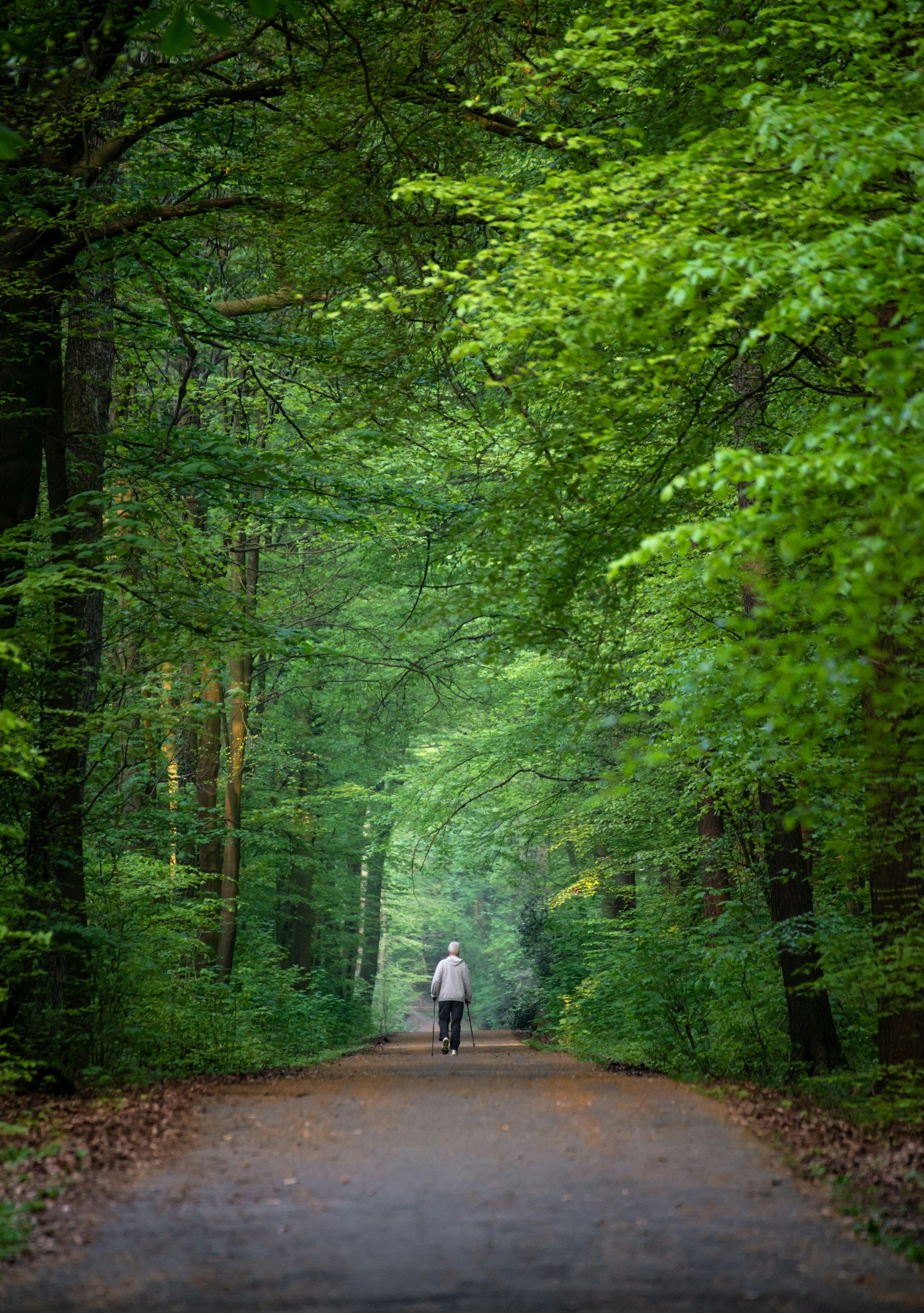
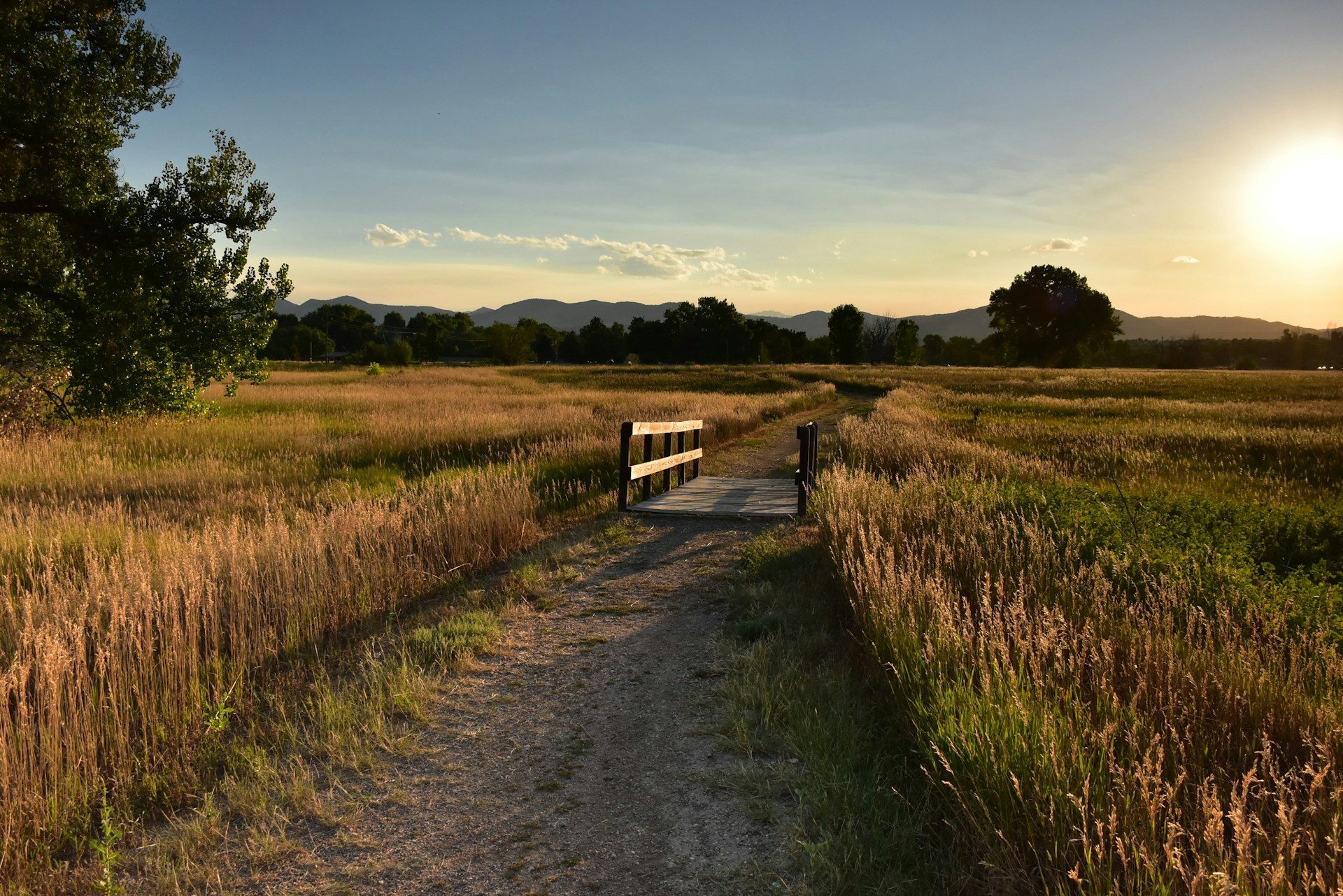
Photo by Gennady Zakharin on Unsplash – Sometimes we have to start moving before the path makes sense.
A friend showed me some old family photos a couple weeks ago.
An uncle of his is getting older and had given him a collection of family photos and other memorabilia he’d accumulated over the years. He knew some stories, and his uncle had told him even more stories about the people in those photos.
We turned a few of them over, hoping someone had written a name or a date on the back.
Nothing.
My friend knew these were his people. Grandparents, uncles, aunts, cousins, maybe great-uncles. He knew some remarkable family stories, including stories from World War II.
But we couldn’t connect the people in the pictures with the stories.
Somewhere along the way, the thread between the stories and the photos had disappeared.
I’ve been thinking lately about my grandpa on my dad’s side.
I know a few things about his history.
He was in World War II. He was stationed in England for at least part of the war. My grandma was English (Welsh actually) and worked as an infectious disease nurse. Apparently, Grandpa was allergic to everything and had to report for treatment regularly.
Somewhere in there, they fell in love. Grandma told me some stories about their time in England. She told me about her trip over to the US after the war on the Queen Mary, alone with her first child, my aunt. She’d eventually meet back up with Grandpa when she got stateside, since he came home via some sort of military transport.
That’s a pretty good beginning to a family story.
My dad was born in Michigan, but I don’t know what brought them to Michigan.
Then there’s a blank section of the story.
At some point they moved to Southern California, where they spent the rest of their lives.
Why did they move? I don’t know.
Grandpa was an operating engineer, operating heavy equipment.
What kind?
Bulldozers? Cranes? Graders?
What sort of projects did he work on?
Roads? Buildings? Dams?
Did he like his work? Was he good at it?
Did he ever come home and tell my dad about something interesting that happened that day?
I have no idea.
There was a time when I could have asked one of them.
My parents and grandparents are gone now. So are all the other people I can think of who might have known.
Lots of memories survive.
Wars. Marriages. A child’s birth.
England survives. Michigan. California.
But a regular Tuesday afternoon disappears.
I’ve caught myself wondering what Grandpa’s mornings were like.
What time did he get up? Did he drink coffee?
Did he pack a lunch? Did he have a thermos?
What kind of truck did he drive?
What did he do on his days off?
Was moving to California some big adventure, or did he simply hear about a job and say, “Let’s go”?
I don’t actually need to know that Grandpa drank coffee in the morning. What I’d want is the coffee itself. The smell of it in a kitchen at five-thirty in the morning before anyone else was up. Their dog trying to get attention in the quiet of their house right before his workday started. Nobody thought to write any of that down, because why would they. It was just another day.
We’ve never had more ways to record our lives than we do now.
I have thousands of photos on my phone. So does almost everyone I know.
We post pictures. Send them through family group texts. Put them in shared albums. Our phones occasionally remind us what we were doing eight years ago today.
We may be the most photographed generation in human history.
I’m not sure that means anyone will know us particularly well in the future.
Someone could someday inherit 14,000 photographs of us and wonder what we were like.
I think you get to know someone differently when you stay at their house for a few days.
You wake up when they wake up. You have more time to hear what’s really happening in their lives. You learn which chair they always sit in. You find out that somebody who seems perfectly organized can’t find their keys three mornings in a row.
Traveling with someone does the same thing, only faster.
Someone is always hungry. Someone needs the bathroom fifteen minutes after you stop. Flights get delayed. Reservations disappear. It rains. You get lost. The restaurant is closed.
People reveal themselves quickly in these situations.
Thinking about all of this makes me think of something very particular about my dad.
When I was a kid, we camped a lot. We went to Lake Havasu with our boat. We went to off-road races.
Dad was meticulous about preparation.
If a trip was four weeks away, he’d point out that he didn’t really have four weeks to get ready.
He worked six days a week. That meant he only had four Sundays.
That was how he thought about it. Four Sundays to get ready.
As the trip got closer, gear began appearing.
Camping equipment. Tools. Boxes. Supplies. Spare parts for the boat. Motorcycle parts, and tools.
He was methodical about storing everything so it could be staged in modules.
For weeks, there’d be a growing pile of gear waiting to go…ready to be packed into the truck.
Dad liked being ready.
Then there was departure time.
If our plan was to leave early Friday morning, there was a very good chance that sometime on Tuesday or Wednesday, Dad would begin reconsidering the wisdom of this plan.
Why wait until Friday morning? I’m already taking Friday off. We could leave the night before. I could cut out of work early on Thursday so we can get a jump on our trip.
Who knew what might go wrong along the way? If something did, we’d have extra time.
And if nothing went wrong, we’d arrive early. Being early was useful.
You get your choice of campsites.
You weren’t rushing. We could be fully set up when everyone else arrives.
It made complete sense to him.
Mom didn’t see the genius of this plan in quite the same way.
Dad had the truck and equipment ready.
Mom had the food. And clothes. And two boys. And all the domestic stuff (Mom and Dad used to talk about Mom being in charge of domestics) to get ready.
For Mom, leaving Thursday night mostly meant she’d just lost twelve hours of prep time.
There was no father-son conversation where he explained the importance of preparation and leaving early.
I just watched (and usually helped) him get everything ready.
And now I like getting up early. I like arriving before other people. I like being prepared.
Once in a while, I find myself thinking that maybe we should leave tonight instead of tomorrow morning.
We probably inherit all kinds of things this way.
Ways of preparing. Ways of worrying. Little phrases. Expectations.
The way we organize our garage.
The way we react when we’re running late.
Nobody announces that these things are being handed down. Years later, we discover them in ourselves.
I wonder what I inherited from my grandfather without knowing it.
Maybe that’s why the missing details about him intrigue me.
I’d like to know how he thought long before I came along.
I’d like to know what he did when a trip was four weeks away.
I recently heard about another kind of writing that seems almost unrelated. Writing about grief or trauma. The basic idea is that putting painful experiences into words can help us process them.
I don’t pretend to understand all the neuroscience involved, and I’m suspicious of explanations that make our brains sound like a filing cabinet where we simply move an experience from one drawer to another. But the idea itself interests me.
Something happens.
It’s overwhelming.
Eventually we sit down and try to describe it…to ourselves.
What happened? What did I feel? What am I still feeling?
Even if nobody ever reads it.
Writing like this can give shape to something that didn’t have much shape before.
It’s almost the reverse of what I’ve been thinking about Grandpa’s mornings. There, I wanted someone to have written down the feeling of an ordinary day before it disappeared entirely. Here, writing takes something that’s still painfully vivid and makes it a little easier to understand.
I’ve written for years now.
Most of what I write begins with whatever captured my attention at that moment.
Something I read. Something that happened at work. Something one of my grandkids did.
Something I’m building.
Something that annoyed me.
Something I suddenly understand differently than I did before.
I don’t usually think of it as preserving history.
I’m just enjoying writing things down.
Sometimes I wonder what someone in my family might find in all my writing fifty or a hundred years from now.
Not because my writing is important.
Because the little things in it might be.
A future member of my family can probably find my birth date.
They may know where I lived and what I did for work…maybe as little as I know about my own grandparents.
They’ll almost certainly have photos. A ridiculous number of them.
But something I wrote about pouring concrete with my grandkids may tell them something the photos don’t.
Or building a campsite. Or struggling with some idea that’s stuck in my head.
Or remembering my dad getting ready for a trip.
They might get a glimpse of what caught my attention on a particular Thursday.
I’ve heard people talk romantically about ancient societies gathering around fire pits at night listening to the elders tell stories about their ancestors.
Fireside stories notwithstanding, I suspect a lot of human history has always been lost.
Someone dies unexpectedly. Nobody ever thought to ask.
The grandchildren weren’t paying attention. The one person who knew the story assumed everyone else knew it too.
A photo gets put in a box. Fifty years later, somebody turns it over.
Blank.
We tend to think of history as big events.
The things printed in books.
But I’m more interested lately in the smaller history.
Why Michigan? Why California?
Who’s the man standing on the left side of that picture?
And what was everybody laughing about?
We’re surrounded by history while it still looks like ordinary life. It’s so easy to miss.
I keep thinking about those old photos my friend and I turned over.
Someone took them. Someone kept them. Someone else kept them after that.
Eventually an aging uncle carefully hands them to my friend because he wants someone in the family to have them.
Unfortunately, most of the stories didn’t make the trip.
In Four Thousand Weeks, Oliver Burkeman questions the idea that freedom means having complete control over our time.
He points out that many of the things that make life worthwhile require us to share our time with other people and coordinate our lives with theirs.
That suggests true freedom isn’t having an empty calendar. It’s choosing who we’re willing to give our time to.
Think of a friend we can always count on, a volunteer who keeps showing up for others, or a leader who accepts responsibility for other people. These commitments limit their freedom in one sense, but also create depth, trust, and belonging.
Choosing who we’ll give our time to is only the beginning. The attention we give them is what makes that time meaningful.
Being present. Making time. Listening well. Giving someone our full attention. These are the ways we turn a commitment into something lived rather than merely chosen.
Commitment gives others a claim on our freedom. Attention is how we honor it.






You must be logged in to post a comment.