Living Inside History

Every generation believes it’s living through extraordinary change.

And in a way, every generation is right.

Economic strain, political division, conflict, and rapid technological change appear in different forms, but the underlying tension remains the same.

Ray Dalio describes what he calls the Big Cycle. The rise and decline of nations shaped by debt, money, internal division, and shifting global power. He would say we’re late in that cycle, marked by high debt, widening wealth gaps, and growing competition among world powers.

Harry Dent approaches history through demographics, studying population growth, and generational spending patterns. From his view, today’s economic strain reflects aging populations, slower growth, and the unwinding of decades of expansion.

Different perspectives. Similar conclusions.

Neither claim to predict the future with precision. Debt cycles, demographic waves, generational moods, technological revolutions, and geopolitical tensions move simultaneously. Understanding these forces and their patterns helps us recognize the currents. How we live within them is still our responsibility.

I remember the OPEC oil embargo of the 1970s and gas lines stretching for blocks. I was in elementary school as interest rates climbed above twenty percent. I watched the Reagan Revolution reshape economic thinking and bring supply-side theory into the mainstream.

I lived through the Iranian Revolution in 1979, the taking of US hostages, and the subsequent spread of militant extremism across parts of the Muslim world over the next four decades. I watched an airplane strike the World Trade Center in real time.

I grew up under the shadow of the Cold War, when nuclear conflict felt possible at any moment. I saw the optimism that followed the fall of the Soviet Union and then watched China open to the world after decades of isolation. I remember the theories about how expanding capitalism in China might soften their communist approach to governing.

I witnessed the savings and loan collapse, multiple stock market crashes, the Great Recession, and a global pandemic that disrupted economies, institutions, and families alike. I watched how strongly governments grasp control when certainty disappears.

I saw personal computers and then the internet transform daily life, followed by the digital economy, smartphones, social media, and now artificial intelligence reshaping work itself.

I can think of countless other historical events that have happened in the span of one life. Each moment felt unprecedented. Each reshaped the world, sometimes positively, sometimes negatively.

And yet, life continued.

When history is written, it focuses almost entirely on macro events. The narratives are dominated by wars, collapses, elections, revolutions, and markets. What rarely appears are the countless individual lives unfolding quietly alongside these events.

History does not record families eating dinner together during times of high inflation. Nor does it record weddings that took place during recessions or children born during wars. It overlooks the laughter that survived fear and the quiet courage required to just keep going.

But these individual experiences of life form the definition of humanity.

For every name preserved in textbooks, millions of people were doing what people have always done. They worked. They loved. They raised children. They cared for neighbors. They hoped tomorrow might be a little better than today.

Macro forces shape conditions. They influence opportunity and may narrow our options. They may, unfortunately, end our life or the lives of someone we love. But they don’t define a life.

Inside every macro upheaval exists our “micro” life. The life lived within the headlines rather than dictated by them.

The world may determine interest rates. It does not decide whether we act with kindness. It may influence careers, but it does not control our integrity. It may introduce hardship, but it does not determine how we respond.

Our response is where freedom still lives.

Viktor Frankl understood this more clearly than almost anyone. After enduring unimaginable suffering in Nazi concentration camps, he observed that nearly all external freedoms can be taken from a person. One freedom remains intact. The ability to choose one’s attitude and response to circumstances.

Events may constrain us. They may demand adaptation. They will never own our human spirit.

In my office, I have a wall filled with photographs. Family gatherings. Wedding days. Trips taken together. Beautiful places. Ordinary moments that became lasting memories.

When I step back and look at this wall, patterns appear.

We worked hard.

We made time for one another.

We traveled together.

We celebrated milestones.

We were living out our hopes and dreams, and we still are.

My wall has no charts or financial forecasts. No macro trend lines. But it tells the story of what matters most.

None of these moments waited for ideal conditions. They unfolded alongside inflation, recessions, political change, and uncertainty. The photographs capture lives shaped by ordinary but important choices made amid extraordinary times.

As we traveled, we met families across many countries. Different customs. Different faiths. Different governments. Yet everywhere we went, the hopes sounded familiar. Parents wanting the best for their children. Families striving for opportunity. Communities longing to contribute and belong.

The differences emphasized by the world shrink quickly when people speak about those they love.

Human aspirations remain remarkably consistent.

History changes its outward form. The heart changes very little.

You will live through upheavals of your own. Some will be frightening. Some will be unfair. Some will test your trust in institutions or leaders.

Remember this.

You are not responsible for controlling history. You are responsible for how you live inside it.

You will not choose the history that surrounds you. You will choose the values you carry through it.

You choose how you treat people.

You choose how to adapt.

You choose how you show up for your family.

You choose whether uncertainty hardens you or deepens your compassion.

You choose whether fear leads or faith steadies you.

These are your choices. Always.

Humanity endures because ordinary people continue to build their lives amid uncertainty. They love, they work, they fail, they adapt, and they hope, even while larger forces move around them.

While empires rise and fall, families persist.

That is the quiet march you belong to. Rarely captured by historians yet carried forward by generations.

History happens around you.

Life happens within you.

Live your life well. Love deeply. Work honestly. Stay flexible. Hold your faith. Care for one another.

If you do that, you will live a meaningful life regardless of when you were born.

As I was finishing this post, I found these quotes from George Bernard Shaw. The words come from two different writings of his from the early 1900’s. Together they express something important about what it means to live well within whatever history hands us.

“This is the true joy in life, the being used for a purpose recognized by yourself as a mighty one; the being a force of Nature instead of a feverish, selfish little clod of ailments and grievances complaining that the world will not devote itself to making you happy. “

“I am of the opinion that my life belongs to the whole community, and as long as I live it is my privilege to do for it whatsoever I can. I want to be thoroughly used up when I die, for the harder I work the more I live. I rejoice in life for its own sake. Life is no ‘brief candle’ for me. It is a sort of splendid torch, which I have got hold of for the moment; and I want to make it burn as brightly as possible before handing it on to future generations.”

h/t – Atkins Bookshelf

Photo by Federico Giampieri on Unsplash

If this post resonated with you, feel free to share it with someone who might appreciate it as well.

You can also listen to the Grandpa Bob Encouraging Leadership Podcast, where I share short reflections on leadership, life, and learning.

Thanks for reading!

When the Disruptors Get Disrupted

For most people in IT, change is constant.

New platforms arrive. Old tools fade. Processes are reworked. Skills must evolve.

In that sense, disruption has long been part of the job description.

Software developers create new and improved tools. They streamline workflows. They automate tasks that once required entire teams. Over time, they have reshaped and disrupted how work gets done across nearly every industry.

This pattern has been in place for decades.

For software developers, something different is happening now.

With the arrival of AI-assisted development tools, including systems like Anthropic’s Claude Code, disruption has begun to turn inward. These tools are reshaping how developers approach their own work.

For many in the profession, this feels unfamiliar.

Software development continues, but the definition and details of the role are shifting. Tasks that once required sustained manual effort can now be generated, refactored, tested, and explained with remarkable speed.

A developer who once spent an afternoon writing API integration code might now spend fifteen minutes directing an AI to produce it, followed by an hour reviewing edge cases and security implications. The center of gravity moves toward judgment and direction rather than execution and production.

When job roles experience disruption, responses tend to follow predictable patterns. Some people dismiss the change as temporary or overhyped. Others push back, trying to protect familiar and comfortable ways of working. Still others approach the change with curiosity and engagement, interested in how new capabilities can expand what’s possible.

Intent Makes the Difference

An important distinction often gets overlooked when discussing pushbacks.

Some resistance grows from denial. It spends energy cataloging flaws, defending established workflows, or hoping new tools disappear. That approach drains effort without shaping new outcomes. It preserves little and teaches even less.

Other forms of resistance grow from professional judgment.

Experienced developers often notice risks that early enthusiasm misses. Fragile abstractions, security gaps, maintenance burdens, and failures that appear only at scale become visible through lived experience. When developers raise concerns in the service of quality, safety, and long-term viability, their input strengthens the eventual solution. This kind of resistance shapes progress rather than attempting to stop it.

The most effective developers recognize this shift and respond deliberately. They move away from opposing new tools and toward advocating for their effective use. They ask better questions. They redesign workflows. They establish guardrails. They apply experience where judgment continues to matter.

In doing so, they follow the same guidance developers have offered others for years.

Embrace new tools.
Continually re-engineer how work gets done.
Move upstream toward problem framing, system design, and decision-making.

Greater Emphasis on Judgment

AI generates code with increasing competence. Decisions about what should be built, which tradeoffs make sense, and how systems must evolve over time still require human judgment. As automation accelerates, these responsibilities grow more visible and more critical.

This opportunity in front of developers calls for leadership.

Developers who work fluently with these tools, guide their thoughtful adoption, and help their teams and organizations navigate the transition become trusted guides through change. Their leadership shows up in practical ways:

-pairing new capabilities with healthy skepticism

-putting review processes in place to catch subtle errors

-mentoring junior developers in how to evaluate results rather than simply generating them

-exercising judgment to prioritize tasks that benefit most from automation

Disruption has always been part of the work.

The open question is whether we meet disruption as participants, or step forward as guides.

Photo by AltumCode on Unsplash

Grandpa Bob Encouraging Leadership — A New Podcast

Over the last 15 years, I’ve written a lot of words.

Words shaped by work and leadership challenges.

Words that grew out of quiet reflection or things that caught my attention at just the right moment.

Many of them were also shaped by family, faith, mistakes, and moments that stayed with me longer than I expected.

More than a few people have suggested I start a podcast. They’d tell me it’s a lot easier to listen than it is to keep up with a bunch of new reading assignments each week.

While my mom was still alive and living with significant vision loss from macular degeneration, I gave the idea serious thought. Listening would have been the only practical way for her to “read” my posts.

Unfortunately, that “serious thought” didn’t turn into action in time for her to benefit.

Ironically, for someone who usually believes in starting, then figuring things out along the way, I let all the steps required to set up a podcast get in the way of beginning.

Until now.

So today, I’m launching a new podcast:

Grandpa Bob Encouraging Leadership

This podcast is a series of short reflections on leadership, life, and learning. I’m sharing them first and foremost with my grandchildren…and with anyone else who might be listening in.

The episodes are intentionally brief, thoughtful, and unhurried.

They’re the kind of reflections you can listen to on a walk, during a quiet drive, or at the start or end of your day.

They’re meant to create space, not fill it.

Who it’s for

At its heart, this podcast is for my grandkids.

Someday, years from now, I want them to be able to hear my voice and know what mattered to me.

The things I noticed. What I learned the hard way. What I hope they carry with them as they find their own way in the world.

But leadership lessons rarely belong to just one audience.

So, if you’re listening, as a parent, a leader, a teacher, or simply someone trying to live well, you’re welcome here too.

What we’ll talk about

Each episode explores a simple idea. Here are some examples:

-Showing up when progress feels slow

-Letting go of certainty

-Choosing gratitude over entitlement

-Learning to wait without drifting

-Leading with trust, humility, and patience

-Paying attention to what’s quietly shaping us

    There won’t be hype. There won’t be slogans. There certainly won’t be any fancy edits.

    I’ll discuss questions worth talking about, and observations a loving grandfather hopes to pass along to his grandkids.

    An invitation

    You can find Grandpa Bob Encouraging Leadership wherever you listen to podcasts.

    Don’t worry if you can’t listen to every episode.

    Please feel free to disagree with anything I say. I don’t have a monopoly on the right answers.

    If even one episode helps you pause, notice something new, or steady yourself a little, then it’s doing what it was meant to do.

    Thanks for listening.

    And if you’re one of my grandkids reading this someday, know that I believe in you and I’m always rooting for you.

    If you’re listening alongside them, the same is true for you.

    Photo by Patrick Fore on Unsplash

    My Friend, Paul

    When I heard that my friend Paul was in the hospital and things weren’t looking good, I can’t say I was shocked. When he passed away a few days later, what stayed with me most was the loss of everything he still had ahead of him.

    Paul had been in a self-destructive pattern for a while. I recognized it early, having seen something similar play out in my own family years before. Still, knowing the path doesn’t make the ending any easier.

    Paul was my brother’s best friend since high school. More than that really…another brother. Like brothers often do, they didn’t agree on everything, but they agreed they were in it together, and that wasn’t going to change.

    I first met Paul when he was probably a sophomore or junior in high school. I was home visiting from my freshman year in college. I remember that mullet like it was yesterday. Business up front, party in the back. He wore it with absolute confidence, as if it were the only reasonable hairstyle.

    He was quick-witted and cocky, but in a good way. Sure of himself, without yet knowing what his future held. Which, in hindsight, makes him a lot like the rest of us at almost any age.

    Paul had a way of knowing everyone. If he didn’t already know you, he would by the end of the day. His personality filled whatever space he walked into. He remembered names after meeting someone once, a gift I’ve always envied. He asked questions, was genuinely curious about people, and he made everyone feel seen. Paul appreciated people, and people felt that.

    He was always ready to dive into big ideas and big projects. He liked to say, “I don’t have a stop sign on my chest.” While others talked about racing off-road “someday,” Paul made it real. With my brother and a group of equally committed friends, he jumped headfirst into building and racing a Class 10 buggy.

    What did Paul know about off-road fabrication or racing at speed in the desert? Not much. That didn’t stop him. He’d figure it out along the way. Thursday nights in his garage turned into a ritual. Fabricating, wrenching, laughing, getting ready. Lots of Saturdays were spent in the desert testing and tuning, trying to make the car race ready.

    My brother was his co-driver, mentor, and probably the unofficial crew chief. I don’t know how many races they finished, maybe one or two, but they often led the first lap and looked great until something small failed. A cheap part. A loose wire. A power steering pump. One tiny thing ending the day.

    They were frustrated, but they didn’t quit. Eventually the Class 10 car gave way to a Class 8 truck. Everything got bigger. More horsepower, bigger suspension, more parts, higher speeds. More complexity. More commitment. More Thursdays. More Saturdays. More races.

    Paul used to joke that the only things standing between him and winning were experience, capability, and funding. All probably true. Where most people would see that as a reason to stop, Paul saw it as part of the adventure. He believed he’d learn as he went, and he’d have fun doing it.

    I was lucky to pit for Paul at a few of his races. But where I really got to see him shine was pitting for Team Honda in Baja and Team Kawasaki in Nevada. I learned that Paul knew the words to every Metallica song, and nearly every other song that came on the radio…rap, country, classic rock. He knew them all.

    One Nevada race stands out. We were assigned the first pit of the day, then relocated to be the final pit later the same day. It’s always fun to be able to do two pits in the same day.

    We scouted the location the day before. A desolate stretch of desert about 50 miles from the start. We rolled out early from our little motel the next morning in the dark to get set up.

    We thought it would be cool to have an official Kawasaki awning over the spot where the bikes would stop for gas and service. It looked great. We forgot one detail. Securing that awning.

    As the first rider, a Kawasaki (of course), came rolling in, Paul had the fuel dump can ready. We could fill a tank in about ten seconds. Everything was smooth. Then the desert wind kicked up, and the awning took off, cartwheeling across the landscape in spectacular fashion right as fueling began.

    There was nothing to do but keep going. Rider one laughed as he pulled out. Did I mention there was film crew there? They laughed. We laughed. Thirty seconds later, rider two came in and out just as fast.

    When we finally went to retrieve the awning that had rolled about a half mile away, we expected wreckage. Instead, it was mostly fine. Scratched, dusty, but intact. At the final pit of the day, we remembered to tie it down.

    When I think of Paul, that’s what comes to mind. The sprinkling of chaos. The laughter. The way nothing ever quite went according to plan, and how little that bothered him or any of us. We were having fun together and that’s what mattered.

    I’ll miss Paul’s infectious grin, his laugh, and his refusal to wait for perfect conditions. He left too early. But he left us with stories, friendships, and a reminder that life isn’t meant to be watched from the sidelines.

    Rest in peace, my friend.

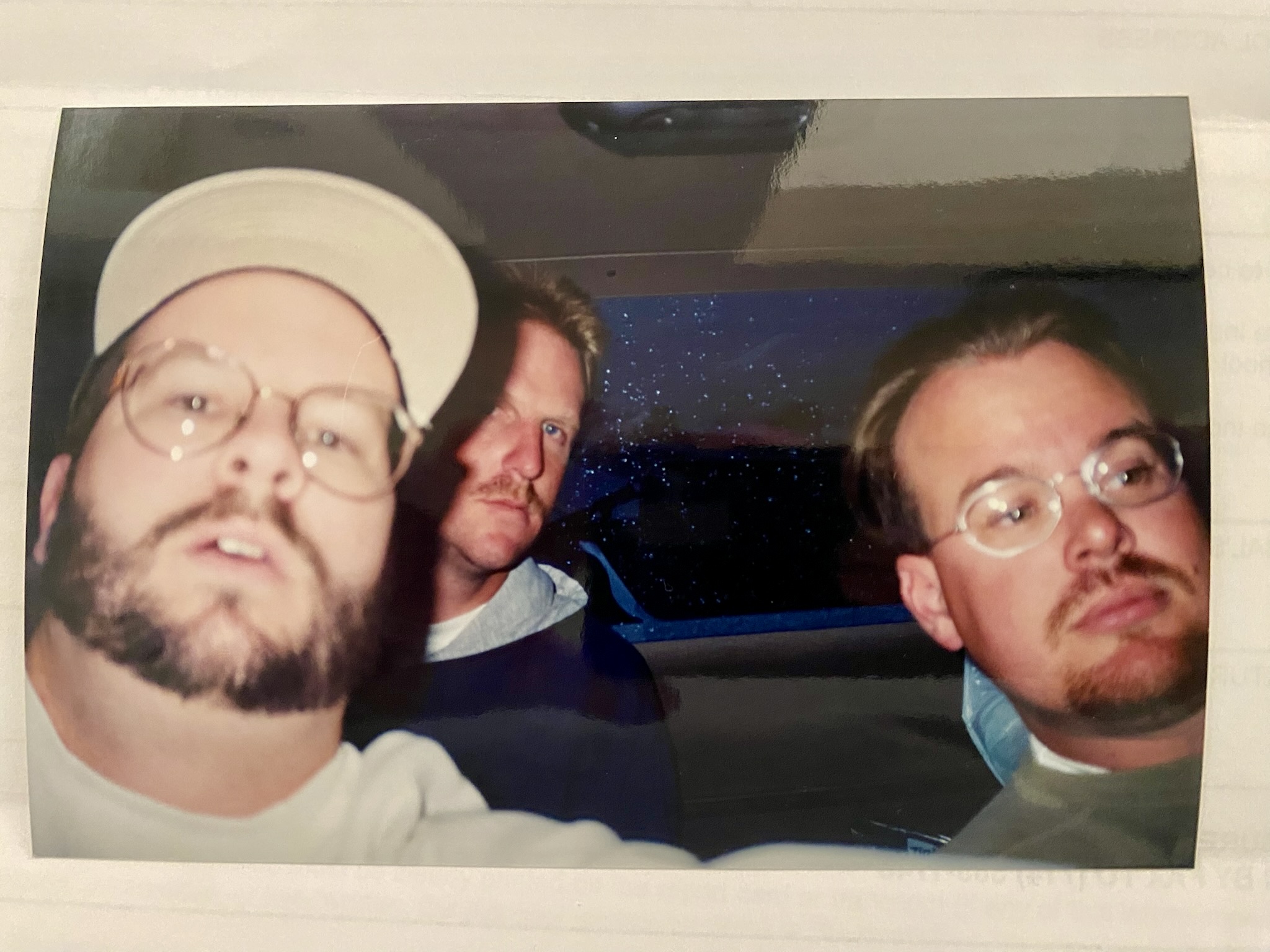
    Photo – a selfie back when selfies were taken with film cameras, at least 30 years ago. Three knuckleheads driving to the desert way too early. That’s my brother and I on the left and my brother’s other brother, Paul, on the right. We’ll miss you, Paul.

    Just Show Up

    As we enter 2026, it’s tempting to look for a new system, a better plan, or the perfect moment to begin.

    Most of the time, the real answer is simpler.

    Just show up.

    The secret to progress isn’t brilliance or motivation. It isn’t certainty or confidence. It’s presence.

    Show up every day.
    Show up when it’s easy.
    Show up when it’s uncomfortable.
    Show up when you don’t know what comes next.

    Show up and be present.
    Show up and handle your business.
    Show up and figure it out as you go.
    Show up for the people you love.
    Show up for the work that matters.
    Show up for yourself.

    When you’re unsure what to do next, don’t overthink it. Show up and take the next step. Clarity usually follows movement.

    The alternative is standing down. Waiting. Drifting. Quietly giving up ground you were meant to claim.

    You’re stronger than that.

    Progress is rarely dramatic. It’s built through consistency. Through ordinary days stacked on top of each other. Choosing to show up when no one is watching.

    The hard things happen because you showed up.
    The meaningful things happen because you stayed.
    The impossible things only happen when you refuse to disappear.

    There’s another truth hidden in showing up.

    When you show up, you give others permission to do the same. Your presence becomes proof. Your consistency becomes encouragement. People notice. They realize they can take the next step too.

    So how do you crush your goals in 2026?

    You don’t wait for the perfect plan.
    You don’t wait to feel ready.

    You show up.
    You make it happen.

    Because that’s what you do.
    And this is how things get done.

    Photo by NEOM on Unsplash

    Please share this post with someone if you found it helpful. Thanks!

    AI as Iteration (at Scale)

    We call it Artificial Intelligence, but large language models don’t think, reason, or understand in human terms.

    A more accurate description might be Artificial Idea Iteration since these tools dramatically compress the cycles of research, drafting, testing, and revision.

    SpaceX didn’t transform spaceflight by having perfect ideas. They collapsed the time between ideas and reality. Failing fast, learning quickly, and iterating relentlessly.

    AI creates the same dynamic for knowledge work, letting us move from intuition to articulation to revision in hours instead of weeks.

    Engineers rely on wind tunnels to test aircraft designs before committing real materials and lives. AI does this for thinking.

    Iteration itself isn’t new. What’s new is the scale for iteration that we now have at our fingertips. We can explore multiple paths, abandon weak directions quickly, and refine promising ones without the time, coordination, and risk that once kept ideas locked in our heads.

    When iteration becomes inexpensive, we can take more intellectual risks and shift from trying to always be right to trying to always get better.

    It’s ironic that as iteration is becoming cheaper and faster with AI tools, human judgment becomes more valuable. Someone still needs to know what’s worth developing, what deserves refinement, and when something is complete rather than exhausted.

    The intelligence was never in the machine. AI simply gives us the capacity to develop ideas, test them against reality, and learn from the results at a scale and speed we’ve never had before.

    Iteration at scale changes what’s possible. Judgment determines what’s worth pursuing.

    Photo by SpaceX on Unsplash – when SpaceX proposed the idea of landing and reusing their rocket boosters after each launch, the idea seemed impossible. Now it’s happening about 3 times per week…and they’re just getting started. 

    Please share this post if you found it valuable…

    Decision Time

    A decision sits in front of us, waiting.

    We turn it over in our head. We ask a few more questions. We look for one more data point. We check with another person whose opinion we respect. We wait for the timing to feel right.

    And still, we hesitate.

    We tell ourselves we need more information. More time. More certainty.

    Indecision usually grows from very human places. Fear of being wrong. Fear of being blamed. Fear of choosing a path that can’t be undone. Fear of embarrassment.

    Add decision fatigue to the mix and postponement starts to feel reasonable.

    Meanwhile, the cost of waiting accumulates quietly. Teams stall. Momentum fades. Confidence erodes. What began as a thoughtful pause turns into drift.

    Most leadership decisions are made without perfect information. Progress rarely waits for certainty.

    So, what is our hesitation really telling us?

    Sometimes, it’s a clear no. A request pulls us away from what matters most. We don’t like what we see, but we’re not sure why. Maybe a partnership doesn’t sit right with our values. In these moments, extended thinking isn’t searching for clarity. It’s searching for a way to explain our decision.

    Other times, we hesitate because the decision stretches us. It introduces uncertainty. It raises our visibility. It asks more of us than we feel ready to give. Growth decisions usually feel uncomfortable before they feel right.

    At some point, the data stops improving and the waiting stops helping.

    Start small. Take a step that tests the decision rather than locking it in. Forward motion reveals new information…something thinking alone can’t.

    A decision that turns out to be wrong isn’t failure.

    It’s feedback.

    And feedback points us toward our next decision.

    “Whenever you see a successful business, someone once made a courageous decision.”
    — Peter F. Drucker

    Photo by ChatGPT’s new image generator, which is way better than prior versions of the tool.

    What If Jarvis Is Available to Each of Us?

    One of the best parts of the Iron Man movies is Jarvis, the ever-present AI system that acts as an extension of Tony Stark’s mind. Jarvis is a collaborator. A research analyst. A pattern finder. A problem solver. He handles logistics, runs calculations, surfaces insights, and stays ready in the background until Tony needs him.

    Jarvis amplifies and extends Tony’s genius.

    Recently, I introduced a friend to ChatGPT. He hasn’t jumped into any AI tools yet, but he can see that people around him are finding real value in them. Like many thoughtful people, his first questions weren’t about features. They were about data privacy. About whether these tools were simply repackaging other people’s work. About what was really going on under the hood.

    At one point, he asked a simple question:

    Is it like having Jarvis around whenever you need him?

    To me, the honest answer is yes.

    But it’s also important to realize that Jarvis isn’t perfect. And neither are the AI tools available to us today.

    The First Questions Matter. Almost every serious conversation about AI tools begins in the same place.

    Is my data safe?

    Who owns the output?

    Can I trust what I’m getting back?

    These are the same questions we ask whenever a new digital tool emerges.

    At a basic level, paid versions of tools like ChatGPT don’t use our conversations to train public models. Even with that protection in place, I still guard my data carefully. If I’m asking questions related to finances, health, or legal matters, I use hypothetical scenarios rather than personal specifics. I’m the first line of defense when it comes to my personal information.

    In professional and commercial environments, organizations using business or enterprise versions gain additional protections around data isolation, encryption, access controls, and audit logging. At the enterprise level, some platforms even allow customers to manage their own encryption keys on top of the platform’s security.

    The tool doesn’t decide what’s appropriate to share. We do.

    Who Owns the Output? We do. The tool doesn’t claim authorship. It doesn’t retain ownership of what it produces for you. The output becomes yours because you directed the work, supplied the context, and decided how the result would be used.

    But ownership is only part of the story. Responsibility matters just as much.

    The tool doesn’t know your intent. It doesn’t understand your audience. And it doesn’t bear the consequences of getting something wrong. That responsibility stays with the human in the loop. That’s us.

    In that sense, using AI isn’t fundamentally different from working with many other analytical tools we may have used for decades. The work becomes yours because you shape it, refine it, and ultimately stand behind it.

    A Note on Sources and Attribution. Owning the output also means owning the responsibility for its accuracy and integrity. This is especially important when it comes to research and citations.

    AI tools can pull together large volumes of information, synthesize ideas across many inputs, and present them in clean, compelling language. That capability is incredibly useful. But it doesn’t remove the author’s responsibility to understand where ideas come from and how they’re represented.

    The tool may summarize research. It may surface commonly known concepts. It may produce language that sounds authoritative and polished. What it doesn’t guarantee is proper attribution or assurance that content isn’t too closely mirroring a specific source.

    That responsibility stays with the human.

    When I use AI for research or writing, I treat it as a starting point. I ask it to surface each source. I follow links. I read original material. And when an idea, quote, or framework belongs to someone else, I make sure it’s credited appropriately. This step also helps catch hallucinations that sound amazingly accurate.

    Ownership requires standing behind the integrity of the work to the best of your ability.

    Can I Trust What I’m Getting Back? Usually. Only with supervision. AI tools are very good at consuming information, identifying patterns, and accelerating first drafts. They are less reliable when precision, nuance, or real-world verification is required.

    They can be confidently wrong. They can lose context. They can blend accurate information with outdated or incomplete details.

    AI tools hallucinate regularly, though this tendency improves with each new model release. These aren’t reasons to dismiss AI as a tool. They’re reminders to understand what AI is and what it isn’t.

    Trust paired with skepticism is the right approach. AI tools are fast-thinking assistants, never the final authority.

    Verification still matters. Judgment still matters. Experience still matters. In fact, the better your judgment, the more valuable these tools become.

    Why Memory Changes the Equation. Most people use AI tools like a smart search engine. Ask a question. Get an answer. Move on.

    That works. But it barely scratches the surface of what’s possible. The real multiplier happens when the tool is allowed to remember context.

    ChatGPT includes a memory capability that lets you intentionally store preferences, patterns, and reference material across conversations. Used well, this transforms the tool from something you query into something you can collaborate with.

    Over the past year and across hundreds of prompt conversations, I’ve shared:

    -My writing voice and stylistic preferences

    -A digital copy of a leadership book I wrote over a decade ago (about 65,000 words)

    -An autobiography I wrote for my children and grandchildren (about 90,000 words)

    -Hundreds of blog posts published over the past 13 years (roughly 240,000 words)

    -How I like to structure projects and approach new work

    In total, I’ve trained the tool with nearly 400,000 words of my original content. This began as an experiment to see if I could reduce generic responses and encourage the tool to approach questions from my foundational perspective.

    The difference is tangible. Early on, whether I was drafting communication, analyzing problems, or organizing ideas, the tool would produce polished but generic output that required extensive rewriting. Now, it reflects my priorities, uses frameworks I’ve shared, and produces work that feels aligned with how I think. I still edit quite a bit, but I’m refining rather than rebuilding.

    Collaboration Requires Judgment. My friend asked me another important question.

    Do you still feel like the writing you produce with it is yours?

    Yes. Completely.

    Every project I’ve worked on with these tools begins with my original content, reinforced by reference material I created long before AI entered the picture. Hundreds of thousands of words written over more than a decade. Clear intent about audience and purpose, using a defined process I’ve established before drafting anything.

    The tool supports rather than replaces my judgment. Drafts usually require significant edits, shifts in tone, and sometimes complete rewrites.

    Where it excels is in synthesis. In retrieval. In pattern recognition across large bodies of work. In accelerating first drafts that already have direction.

    Large projects require constant supervision. Threads get crossed. Context gets muddled. The tool needs redirection, clarification, and sometimes retraining as the work evolves.

    This is simply the nature of collaboration.

    Why the Hype Misses the Point. There’s a popular narrative circulating that anyone can now write a book, write a complex software application, create a website, start a business, or become an expert with just a few well-written prompts.

    This misunderstands both the tools and the craft associated with each of these tasks.

    I think of AI the way I think of a great camera. We can all buy the same equipment. That doesn’t guarantee an amazing photo. The quality still depends on the eye behind the lens, the patience and skills to frame the shot, and the willingness to edit ruthlessly afterward.

    Ansel Adams once said that asking him what camera he used was like asking a writer what typewriter he used. The tool matters. But it has never been the point.

    The same is true with AI tools.

    Without intent, taste, and care, straight AI output feels flat and formulaic. Readers will notice. Substance can’t be faked. Depth doesn’t appear by accident.

    These tools reflect the discipline of the person using them.

    Hitting the Ground Running. For someone just getting started, the biggest mistake is expecting magic. The better approach is to build understanding and training into the process (for you and the AI tool).

    Explain what you’re trying to do.

    Tell the tool how you think.

    Correct it when it’s wrong.

    Guide it when it drifts.

    Treat it like a junior collaborator. One that’s fast, tireless, and remarkably capable…but still dependent on direction and context.

    If you’re looking for a practical first step, try this. Find an article you’ve read recently and ask the tool to summarize it. Compare that summary to the original. Notice what it captured, what it missed, and what it misunderstood. This simple exercise reveals both the tool’s strengths and its limitations in a low-stakes way.

    From there, you might ask it to help you draft an email, outline a presentation, or brainstorm solutions to a problem you’re facing. Start with tasks where you can easily evaluate the quality of the output and provide feedback on what the tool provides. 

    Over time, you’ll notice the quality improves. That’s when the tool begins to resemble the Jarvis we imagined. It isn’t perfect, but it becomes more aligned with what you value most and how you like to approach your work. At the same time, your understanding of its strengths and limitations becomes clearer through consistent use.

    AI doesn’t replace thinking. It requires it.

    Used carelessly, it produces noise. Used deliberately, it sharpens your insights.

    The question is whether we’re willing to slow down at the beginning, set expectations, and engage AI tools with proper intention.

    Only then can these tools truly serve us well.

    Photo by Chris Haws on Unsplash – photographers often say, “It’s about the photographer, not the camera.”

    If this post was helpful, please feel free to share it.

    Words Around Christmas

    December turns our words to gold,
    Tidings, joy, and peace foretold.
    Lights like stars along our eaves,
    Hope returns on winter’s leaves.

    Forgotten words begin to rise,
    Childlike wonder in our eyes.
    Tinsel, sleigh bells, candle-glow,
    Songs of Christmas we all know.

    Jingle bells and sleighs take flight,
    Rudolph glows through frosted night.
    Elves and workshops, North Pole cheer,
    Santa’s laughter draws us near.

    Snickerdoodles and mulling spice,
    Our kitchen’s warmth feels soft and nice.
    Welch cakes, pasties, stories told,
    Trimmings bright against the cold.

    Village lights and carols ring,
    Wishes whispered, children sing.
    Holly, ornaments, and good cheer
    Mark the turning of the year.

    Laughter spills from room to room,
    Chasing winter’s early gloom.
    A gift is only paper bright
    Till love folds edges soft and tight.

    Traditions bloom in winter air
    When generations gather there.
    Past and present intertwined,
    Stories passed from heart to mind.

    Nutcrackers guard, reindeer in flight,
    Stockings, holly, silent night.
    Sacred stillness gently kept,
    In the hours while we slept.

    Speak with warmth in every line,
    Merry heart and joy divine.
    Let kindness shape the songs we sing,
    for Christ is born, our promised King.

    Let peace on earth be more than art,
    let joy take root in every heart.
    Let words become the lives we live,
    hope to hold, and grace we give.

    For all these phrases loved and dear
    return to us but once a year.
    They point us toward God’s Word,
    the sweetest story ever heard.

    Love made its dwelling in the hay,
    a Child who gave the world its way.
    We speak these golden words because
    He came to live His love through us.

    Photo by Rafał Danhoffer on Unsplash

    Always Improve Your Position

    A few days ago, I was listening to Jocko Willink speak about the quiet discipline behind Brazilian jiu-jitsu. I’m not a jiu-jitsu person, but one idea landed for me. It’s a truth I already knew but had never heard spoken so simply:

    Always improve your position.

    In jiu-jitsu, nothing happens all at once. A submission arrives like lightning, but only to the untrained eye. What looks like a sudden victory is really the final expression of dozens of subtle movements that came before it. A hip shifts. A grip tightens. An elbow gains an inch of space. Most of these moves go unnoticed. Each small adjustment creates a little more room, a little more leverage, a little more advantage.

    I’ve always believed real progress works this way. It’s rarely dramatic. It’s quiet and patient. The accumulated effect of showing up, learning something new, adding a bit more care, and preparing a little more than required.

    Breakthroughs rarely come from a single moment of inspiration. They come from the quiet work no one sees. The thoughtful practice that sharpens your skills, the trust built over months of ordinary conversations, the time spent learning before making a decision. When opportunity arrives, it looks sudden to others. To you, it feels like the next logical step.

    This truth showed up clearly for me after a derecho tore through our property on Father’s Day weekend a few years ago. Ninety-mile-per-hour winds knocked down at least thirty trees across multiple acres. When I walked our land the next morning, everything felt broken and overwhelming. The cleanup looked like a project that would take months. I didn’t have months to devote to it.

    But I did have mornings. So, I decided to work for an hour and a half every day before work. I cleared a small section each morning. It was incredibly slow. I dragged branches, cut trunks, chipped debris, split firewood, and made countless trips to our local dump. Small steps, small progress, one morning at a time.

    Over the course of a year (maybe more), I worked my way across our entire property. Along the way, I cut in new hiking trails and removed a number of unhealthy trees. What started as a mess became a healthier stand of trees and a network of paths that look like they’ve been here forever.

    Out of destruction came a daily habit that changed my life. I still work outside every morning. Clearing brush, trimming trees, expanding trails, building chicken coops, restoring a rustic barn. All in small ninety-minute bites. It’s like a time-lapse video created through countless quiet mornings of small improvements.

    The pattern I saw on my land is exactly what Jocko described on the mat. I didn’t need a grand plan or a burst of superhuman effort. I needed to improve my position every day, just by a little.

    Improve your position today, even by an inch, and tomorrow becomes easier. Improve it again tomorrow, and the day after that reveals options that didn’t exist before. You don’t need surges of motivation or dramatic reinvention. You only need the willingness to keep moving, always improving.

    Careers grow this way. Trust grows this way. Faith deepens this way. Families strengthen this way.

    Progress won’t always be linear. Some days distractions will pull us off course, or setbacks will undo work we thought was finished. All of this is part of the journey. Even then, the way forward still comes through small steps. Imperfect, uneven, but the work of always improving our position remains the same.

    We improve our position slowly, almost without noticing. That’s enough. Tomorrow, we’ll improve again. Then one day, we’ll find ourselves able to take a step that would have felt impossible a year ago.

    Focus on the next inch. The miles will take care of themselves.

    Photo by Walter Martin on Unsplash – a great rendition of my early morning work environment for at least a year.